Cameo Systems Modeler (now part of Dassault Systèmes' Catia Magic portfolio, formerly No Magic / MagicDraw) is a leading SysML modeling tool, prized for its depth and standards conformance. Dalus is an AI-native MBSE platform that aims to deliver comparable rigor with modern collaboration and dramatically lower onboarding effort. Here's how they compare.
At a glance
| Dalus | Cameo Systems Modeler | |
|---|---|---|
| Approach | AI-native MBSE platform | Deep SysML modeling tool |
| Interface | Web-based, collaborative | Desktop (Java); Teamwork Cloud for collab |
| Learning curve | Designed for fast onboarding | Steep; deep SysML expertise expected |
| AI assistance | Built-in AI copilot | Limited / add-on |
| Modeling language | SysML v2-era concepts | Strong SysML v1.x conformance |
| Deployment | Cloud or on-premise | Desktop + on-prem collaboration server |
| Best for | Modern, collaborative MBSE | Standards-heavy, deep SysML modeling |
Where Cameo is strong
Cameo is one of the most standards-conformant and feature-complete SysML v1 tools available. For organizations with deep SysML expertise, complex profiles, and a need for exhaustive modeling control, it is a proven, powerful choice with a large ecosystem of plugins and integrations.
Where Dalus differs
- Approachability: Cameo rewards deep expertise but is demanding to learn. Dalus is built so a broader team can contribute without becoming SysML specialists.
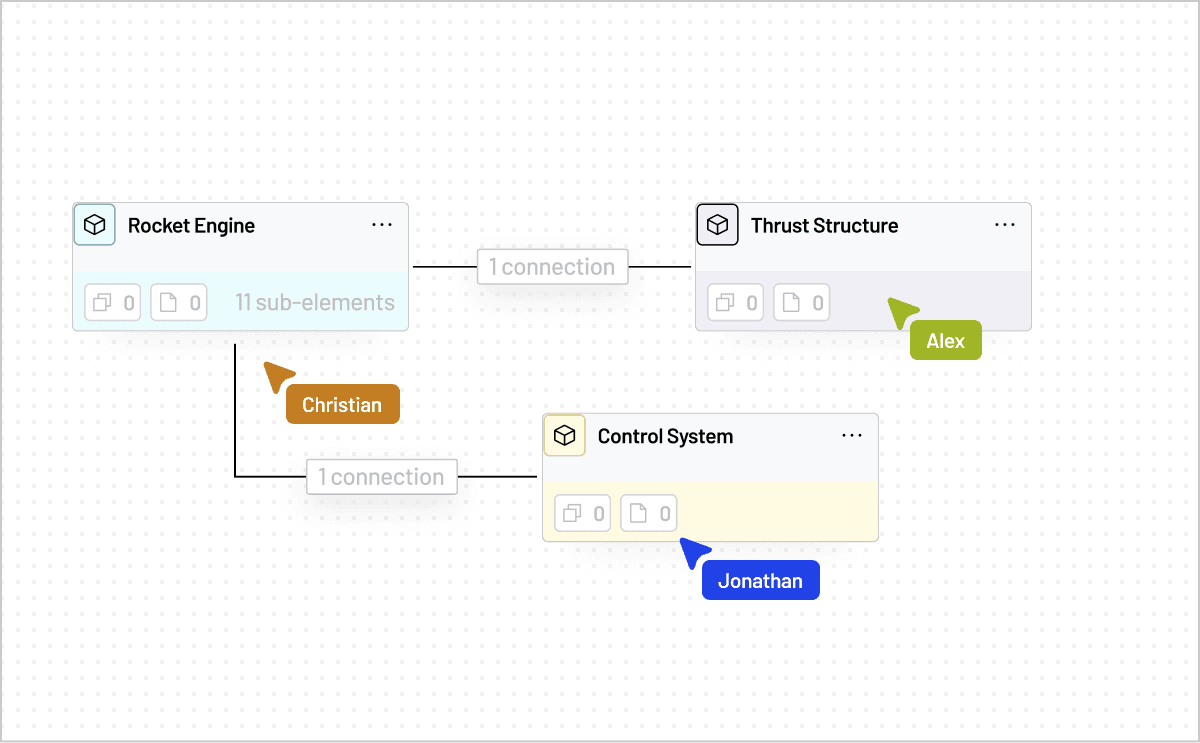
- Native collaboration: Dalus is multiplayer and web-based; Cameo's real-time collaboration relies on a separate Teamwork Cloud server.
- AI copilot: build and interrogate the model in natural language, lowering the expertise barrier.
- Unified rigor: requirements, architecture, analysis, and verification in one connected workspace.
- Modern foundation: Dalus aligns with SysML v2-era interoperability rather than the v1 lineage.
Which should you choose?
Choose Cameo if your team has deep SysML expertise and needs exhaustive, standards-driven modeling control. Choose Dalus if you want MBSE rigor that the whole engineering team can adopt quickly, with built-in AI, native collaboration, and on-premise deployment for secure work. If you're weighing the methodology itself, read MBSE vs. document-based systems engineering.
Frequently asked questions
What is the difference between Dalus and Cameo Systems Modeler?+
Cameo Systems Modeler (Dassault Catia Magic, formerly No Magic) is a deep, standards-conformant SysML v1 desktop modeling tool. Dalus is a modern, AI-native MBSE platform that delivers MBSE rigor through a web-based collaborative workspace with a built-in AI copilot and a much faster learning curve.
Is Dalus a good Cameo Systems Modeler alternative?+
Yes, especially for teams that want broad adoption across engineers without requiring deep SysML specialization, plus native real-time collaboration, AI assistance, and on-premise deployment.
Does Dalus require deep SysML expertise like Cameo?+
No. Dalus is designed so systems engineers can be productive quickly, and its AI copilot lets users build and query the model in natural language, lowering the SysML expertise barrier.