Siemens Polarion is a well-known, web-based application lifecycle management (ALM) and requirements management platform. Dalus is an AI-native MBSE platform. They overlap on requirements and traceability, but solve different core problems, and understanding that distinction is the key to choosing.
Different categories, overlapping needs
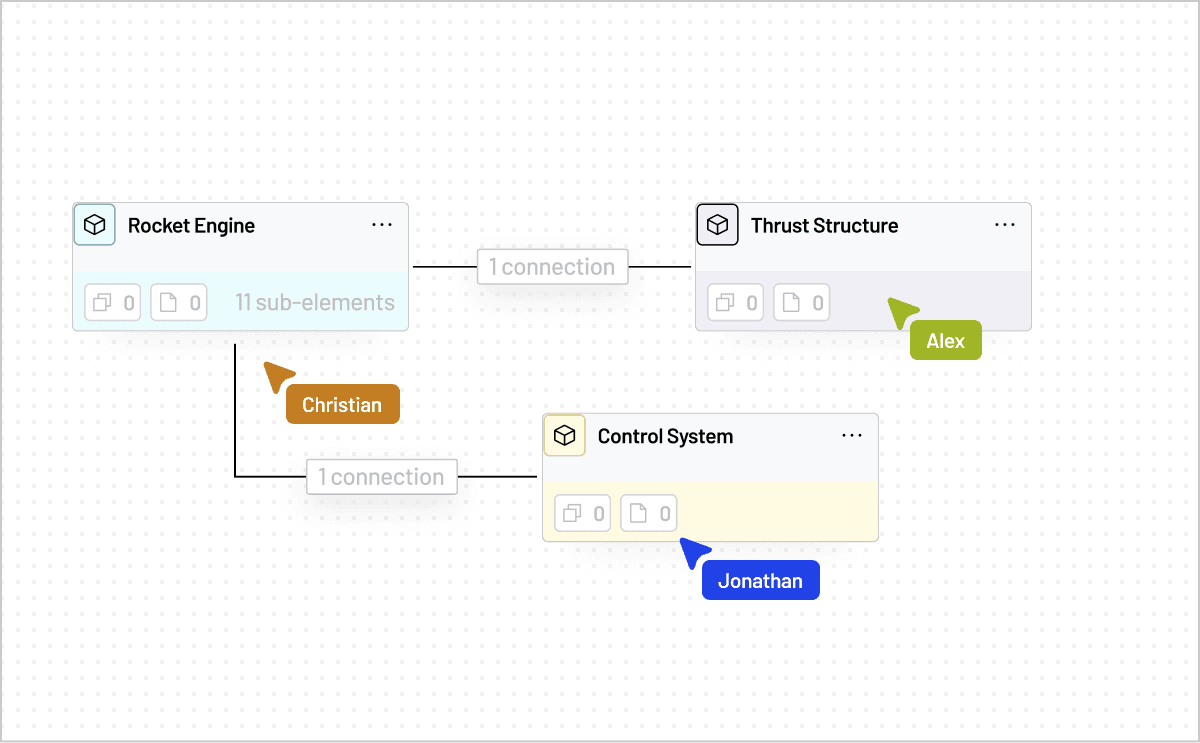
Polarion's heart is requirements, work-item, and test management with strong traceability and a web interface. Dalus's heart is a connected system model: requirements *plus* architecture, behavior, parametrics, and verification linked together. If your need is purely requirements and ALM, Polarion is squarely in its lane. If you need to model the system itself and trace requirements into design and analysis, that's MBSE.
At a glance
| Dalus | Siemens Polarion | |
|---|---|---|
| Primary category | MBSE platform | ALM / requirements management |
| System architecture modeling | Core capability | Not a modeling tool |
| Requirements + traceability | Yes, linked to the model | Yes, a core strength |
| Analysis & verification in-model | Yes | Test management, not engineering analysis |
| AI assistance | Built-in AI copilot | Limited / add-on |
| Deployment | Cloud or on-premise | On-premise / cloud |
| Best for | Modeling and verifying the system | Managing requirements & ALM workflows |
Where Polarion is strong
Polarion is a robust, browser-based platform for managing requirements, change, and test workflows across large teams, with strong configurability and reporting. For organizations whose central need is ALM and requirements governance, it is a mature, capable choice.
Where Dalus differs
- It models the system, not just the requirements: architecture, interfaces, behavior, and parametrics live alongside requirements.
- Engineering analysis and verification are linked to the model, so you prove requirements against the design, not just track test status.
- AI copilot helps build and query the model in natural language.
- One connected source of truth rather than requirements in one system and the system design elsewhere.
Which should you choose?
If you only need requirements and ALM, Polarion is a strong fit. If you need to engineer and verify the system itself with full traceability from requirement to design to test, you need MBSE, and Dalus delivers that with modern collaboration and AI. Learn more in what is MBSE.
Frequently asked questions
What is the difference between Dalus and Siemens Polarion?+
Siemens Polarion is primarily an ALM and requirements management platform. Dalus is an MBSE platform that models the whole system, requirements plus architecture, behavior, and verification, in one connected model. Polarion manages requirements and workflows; Dalus models and verifies the system itself.
Is Dalus a requirements management tool like Polarion?+
Dalus includes requirements management, but unlike a pure ALM tool it links requirements to system architecture, analysis, and verification in a single model, providing end-to-end engineering traceability rather than requirements tracking alone.
Can Dalus replace Polarion?+
It depends on your need. If your central requirement is ALM and requirements governance, Polarion is purpose-built for that. If you need to model and verify the system with full traceability, Dalus covers requirements within a broader MBSE platform.